
[2026 N2SF Response Solution Report] National Network Security Framework Drives Growth Beyond Public Data Security
Policy shift from Multi-Layered Security (MLS) to National Network Security Framework (N2SF) and release of Guideline 1.0
Architectural evolution from network separation-centric security to data importance and workflow-based security
In-depth analysis of N2SF response solutions: Withnetworks
The National Intelligence Service (NIS) announced the Multi-Layered Security (MLS) framework in 2024 and released the N2SF Guideline 1.0 in 2025, declaring a commitment to strengthening public data security. N2SF is garnering significant attention as the structural foundation for Zero Trust security architecture. Let’s explore the "N2SF Syndrome," driven by leading domestic security companies racing to launch response solutions.
![[gettyimagesbank]](https://static.wixstatic.com/media/d9b553_2da1ed21ac6143dc95dd70b860808889~mv2.png/v1/fill/w_600,h_339,al_c,q_85,enc_avif,quality_auto/d9b553_2da1ed21ac6143dc95dd70b860808889~mv2.png)
Defining N2SF: A joint Effort Forecasting Exponential Growth
In January 2024, an inter-ministerial joint TF was formed following presidential orders to improve the network separation system, primarily due to difficulties in data sharing and utilization. Challenges in collecting AI training data were identified as a major conflict with national policies like the Digital Platform Government.
Subsequently, research on the Multi-Layered Security (MLS) framework was conducted. The MLS roadmap was first unveiled at the "Cyber Summit Korea (CSK) 2025" in September 2024, introducing data classification based on importance: Classified (C), Sensitive (S), and Open (O).
In January 2025, with the release of the "Draft National Network Security Framework Security Guideline," the policy was officially renamed from MLS to N2SF (National Network Security Framework).
Tiered Security Measures Based on Data Importance
According to the N2SF guidelines, "N2SF is a security framework that identifies the tasks of each organization, classifies them by importance, and applies differential security controls accordingly." Organizations can autonomously identify threats and implement security controls when planning new informatics projects.
N2SF also presents major information service models that illustrate the evolving public sector environment. These models provide specific security control items derived through expert analysis of threats, requirements, and existing regulations.
Withnetworks explains: "The core is a network security system based on information importance that applies differential security controls—specifically across 3 stages, 6 domains, and over 280 items—depending on the classification and threat level." This evolves into a governance model where customized security architectures and control policies are designed by comprehensively considering each organization's services, data, and network design.
N2SF Guideline 1.0: Shifting to Autonomous Risk Identification and Response
Released in September 2025, Guideline 1.0 provides specific application procedures and templates. The industry welcomes this practical approach. Experts view this not merely as a new list of technologies, but as a fundamental shift toward a security operating system where organizations identify risks based on workflows and assets, continuously managing and adjusting them. This indicates that N2SF is a long-term operational standard rather than a short-term implementation task.
![▲Domestic/Global N2SF Solution [Source: BoanNews·Security World]](https://static.wixstatic.com/media/d9b553_7270aa3257544b9299be5a316e2b5da4~mv2.jpg/v1/fill/w_980,h_1860,al_c,q_85,usm_0.66_1.00_0.01,enc_avif,quality_auto/d9b553_7270aa3257544b9299be5a316e2b5da4~mv2.jpg)
Strategic Growth: The "Plus 1 Point" Incentive in Cybersecurity Evaluations
The NIS has introduced a "1-point bonus" for N2SF implementation in the 2026 National and Public Institution Cybersecurity Evaluation. This move is expected to positively impact public security levels and market structures.
The transition to N2SF creates incentives for organizations to move toward task- and data-centric security designs. Beyond simply deploying network separation equipment, the core of evaluation now lies in building an N2SF architecture that considers information grades (C/S/O), service models, and control levels across six domains, thereby raising the overall maturity of the industry.
Withnetworks emphasized that this bonus acts as a "strategic pivot" in public procurement. As the market shifts from hardware-centric network separation to integrated platforms covering asset identification, risk assessment, Zero Trust, and data protection, an environment is created where companies with expertise in architecture, operations, and data analysis can thrive. This serves as a catalyst for the domestic security industry to move into high-value-added sectors.
Key Issues in N2SF: Data Classification and Implementation Scope
The defining difference between N2SF and traditional network separation lies in "how to classify data". Before moving to the next stage, the C/S/O (Classified/Sensitive/Open) grading must be established. The primary challenge for organizations is determining how to evaluate and classify the vast amounts of data they possess on an individual basis.
Furthermore, there is a significant emphasis on how to bridge the gap between existing network separation environments and the transition to N2SF. Rather than completely replacing established systems, there is growing interest in gradually transitioning or coexisting with them by reflecting N2SF principles. Industry experts view the redesign of network integration structures, access control methods, and business unit separation standards as pivotal points of discussion.
Technical considerations also persist regarding the practical implementation of a "dynamic security system based on business information grades and risk levels". To realize N2SF, there must be a seamless integration of asset and task identification, risk assessment, policy decision-making, policy enforcement, and log/event analysis. Additionally, integration with autonomous security and risk management frameworks (such as K-RMF and PTaaS) that utilize AI and automation technologies is increasingly crucial.
User Perspectives: High Interest, Cautious Implementation
While interest in N2SF is high, customers remain cautious. Many agree with the guideline's direction but deliberate over the specific configuration and sequence of adoption.
In response to surging inquiries, the security industry is moving beyond solution supply to offering integrated packages—including consulting, implementation, and operation—and strengthening technical alliances. Companies are expanding partnerships to ensure interoperability and continuous access to the latest threat intelligence.
The pace of N2SF adoption varies by institution type. Withnetworks noted that while discussions are spreading among large-scale organizations and central ministries, specific RFP statuses vary by individual policy and budget, characterizing the current phase as an "early adoption and transition period."
User Survey: Expectations for N2SF Solutions
According to a survey of 1,366 security professionals conducted by Boannews and Security World in January 2026:
79.4% of respondents work in environments requiring network separation/integration.
Desired Features: 42.7% prioritized "Convenience (securely accessing the internet and business tasks on a single PC)," followed by "Automation and simplification of data transfer (27.9%)," "SaaS adoption (16.2%)," and "Generative AI utilization (13.2%)."
Essential Functions: "Strong Security (Data protection and transfer control between grades)" was the top choice (41.2%), followed by "User Convenience" (31.6%) and "Flexibility for Cloud/AI" (14.0%).
![▲User Survey: N2SF Solutions [Source: BoanNews·Security World]](https://static.wixstatic.com/media/d9b553_eb089d2a5f2945c59bbb3ad3219227ec~mv2.jpg/v1/fill/w_980,h_2415,al_c,q_90,usm_0.66_1.00_0.01,enc_avif,quality_auto/d9b553_eb089d2a5f2945c59bbb3ad3219227ec~mv2.jpg)
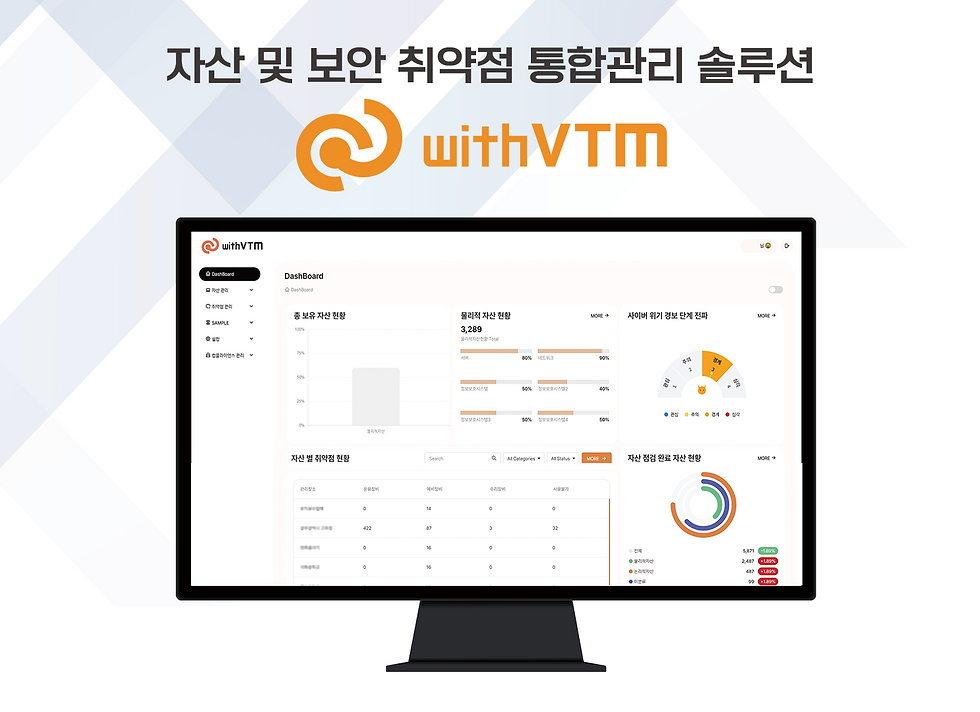
Withnetworks' 'withVTM': A Practical Solution for N2SF Implementation
Integrated Asset and Vulnerability Management Solution: withVTM
Asset identification based on NIST standards and AI risk assessment supporting everything from info grading to security control.
Following the official release of N2SF Guideline 1.0, security strategies must shift toward integrated systems based on information importance and actual risk. While traditional physical network separation provided a safety net, it faced limitations in the era of Cloud, AI, and SaaS. Withnetworks' 'withVTM' is gaining attention as a Asset/Risk Context Engine that provides the core foundation for N2SF and Zero Trust implementation.
From Network-Centric to Task/Info-Centric
N2SF replaces the uniform network separation held for 19 years. It classifies information into C/S/O grades and applies differential controls across 6 domains (Access Control, Network Structure, Data Protection, Terminals, Accounts, and Operations Management). The focus shifts from "how to divide the network" to "how to protect which information."
In reality, asset information is often scattered across CMDBs or Excel sheets, while business info resides in planning documents. withVTM bridges this gap by integrating asset, business, and risk information into a single policy architecture.
Combining NIST-based Identification with AI Risk Assessment
A key differentiator for withVTM is its asset modeling layer based on NIST standards. It collects HW, SW, Cloud, and Shadow IT using standard schemas (referencing NIST IR 7693 and NIST CSF ID.AM). It gathers essential metadata for N2SF grading, such as business functions, info types (C/S/O candidates), and external connectivity.
Furthermore, withVTM's AI Risk Engine complements the limitations of the Common Vulnerability Scoring System (CVSS) by analyzing attack accessibility and real-world exploit cases. It prioritizes assets that are likely to be exploited within the specific organization, providing direct insights for N2SF control design.
Supplying Context to Zero Trust Policy Engines
N2SF explicitly incorporates Zero Trust principles: "Never trust, always verify based on context." withVTM supplies critical context—asset importance, risk levels, and account ownership—to the Policy Decision Point (PDP) via API. This allows the policy engine to automatically demand additional authentication for high-risk C/S/O servers or apply sandboxing/DLP policies to data exiting high-risk assets.
3-Stage Implementation for Continuous Operation

1️⃣ Stage 1 (Diagnosis): Collect and normalize assets, calculate risk units, and identify inconsistencies with current controls.
2️⃣ Stage 2 (Design): Derive N2SF service models and C/S/O grade drafts using metadata to provide quantitative evidence for protection levels.
3️⃣ Stage 3 (Implementation & Monitoring): Link protection policies with Zero Trust engines, NAC, EDR, and SIEM. withVTM continuously updates risk levels based on asset changes and threat intelligence, evolving N2SF into a living security system.
withVTM is a technical response to the N2SF era. Before worrying about network structures or product lists, accurately mapping the landscape of assets and risks is the first priority. This is why withVTM exists.
Boan News/Security World


![[Tech Guide] WithNetworks’ ‘HawkAI’ Turns Wi-Fi APs into AI Security Sensors, Enabling Real-Time Response to Wireless Threats](https://static.wixstatic.com/media/d9b553_fc2aec62eafd48a297a7ae83cbd88d8b~mv2.png/v1/fill/w_980,h_588,al_c,q_90,usm_0.66_1.00_0.01,enc_avif,quality_auto/d9b553_fc2aec62eafd48a297a7ae83cbd88d8b~mv2.png)
Comments